v1.2 update: traffic via historical trends
Trip times, route choices and crash risk now change with the hour and day you leave based on historical traffic patterns.
Changelog:
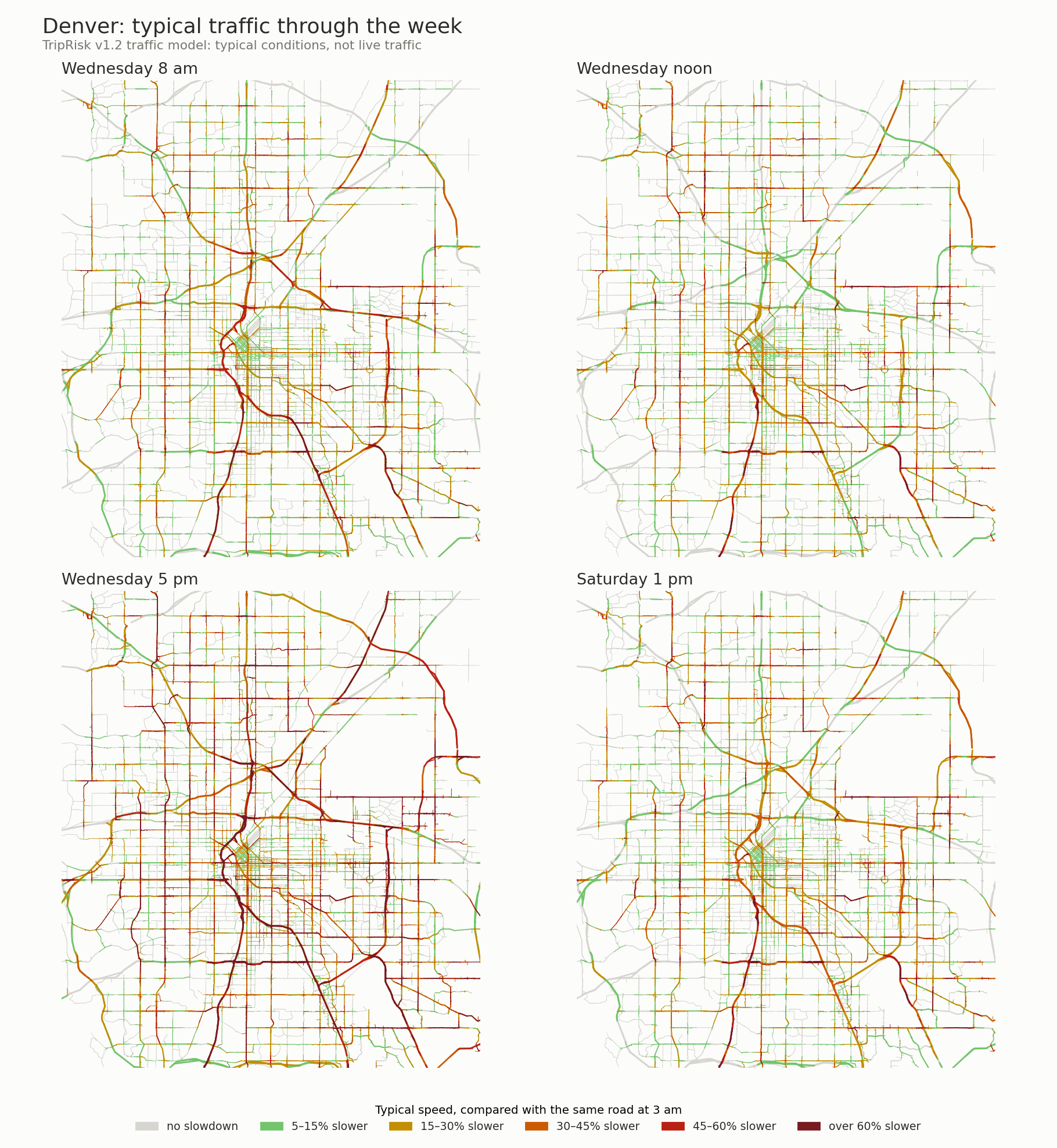
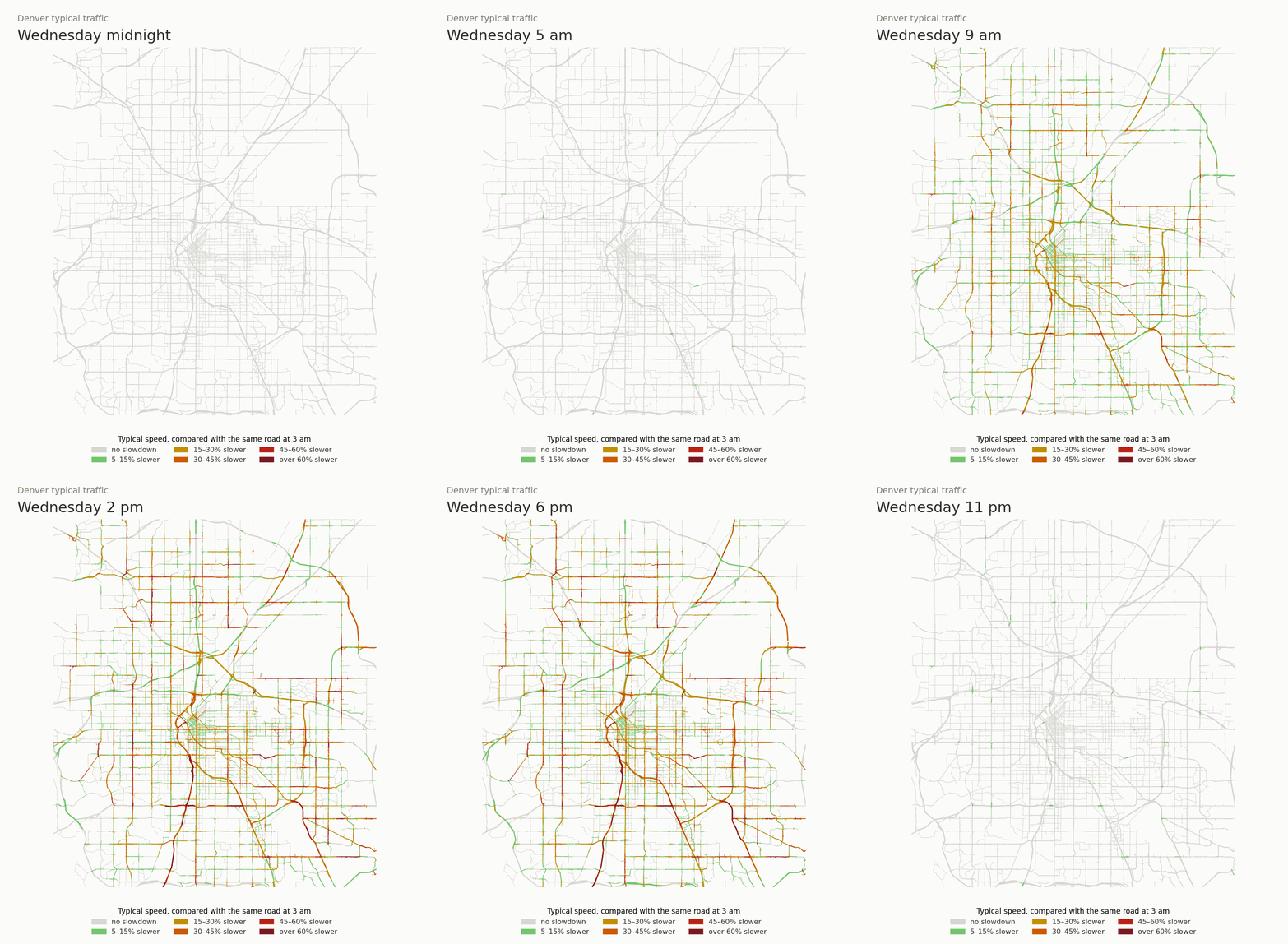
Typical traffic. Traffic is calculated based historical traffic data.
Time lost to traffic. Each route now shows how much time is added by traffic.
Traffic signals. Time waiting at signals and stop signs is now dynamic with traffic.
Crash risk by hour of the week. Fatal crash risk is now scored based on the the hour you would reach each part of the route. This replaces the separate day/night adjustment.
How traffic works
Because live traffic requires an expensive service that is not supportable at the current donation levels, TripRisk does not use live traffic. Instead it useses historical traffic data to calculate how busy each road is at a given time.
How busy each road is. Average daily traffic and road capacity for every major US road from the Federal Highway Administration (HPMS).
Which way the rush goes. Mornings are busier heading into cities and evenings heading out. Using about 400 US city centers from OpenStreetMap, each road is weighted by whether it points toward or away from nearby centers.
How speed drops as roads fill. Standard traffic-engineering curves turn the volume-to-capacity ratio into a speed. Curves are calculated separately for freeways and streets.
Traffic signals. At each signal, the typical wait comes from traffic-engineering formulas and grows with traffic.
Overall levels were verified against the TomTom Traffic Index and against national traffic studies.
What it means for the safest route
The safest route is still chosen for safety alone, not time. But the route can change based on the safety of roads based on their traffic profile at a given time.
The fastest route now reflects traffic and traffic is included in the reported times for any route type.
Limitations
Typical, not live: crashes, construction, events, and weather delays are not included.
Trips longer than about 90 miles (150 km) are timed without traffic.
Traffic is still mildly undercounted in very dense cities such as New York and Chicago.
Rural roads get almost no traffic delay, which matches the reality for most, but likely not all, of them.